Every painted shaker door in every new kitchen you walk into is probably MDF, and more of them every year are cut on a CNC as one piece. That didn't happen overnight. Here's the short version of how we got here, and where I think it's going.
1925: a press left running
MDF's ancestor was an accident. William Mason was trying to find a use for the chips and shavings that sawmills threw away. One evening he left his press running on a batch of them, and what came out was a thin, dense, surprisingly tough sheet. That was hardboard. He patented it, and the idea that you could turn mill waste into a flat panel was born.
The 1960s: MDF arrives
Medium-density fiberboard was developed in the United States in the 1960s, with the first production in Deposit, New York. The difference from hardboard was the density: dense enough to hold an edge and take a machined profile, light enough to work like wood. By the 1980s it was in mass production and showing up everywhere a flat, stable, paintable panel was wanted. Cabinet shops used it for painted panels and slab doors.
The routed veneer door
The first time a router met an MDF door, the door was a slab. Shops took veneered MDF, oak mostly, and ran a hand router or a pin router around it to cut a raised-panel pattern into the face. It gave a flat slab the look of a frame-and-panel door at a fraction of the labor, and a lot of kitchens got those doors. The veneer was the limit. Route through it and you're into brown fiber, so the patterns stayed shallow and the look stayed dated. But the idea was right: carve the door into the sheet instead of building it from parts.
The five-piece years
For painted work, an MDF cabinet door still meant a five-piece door. Rails and stiles, a panel, cope-and-stick joints, glue, clamps. Shops did it because that's how a door was built, and because the equipment to do anything else cost more than a small shop could justify. The frame-and-panel look was the look, and MDF was just a cheaper, flatter way to get it painted.
The CNC in the small shop
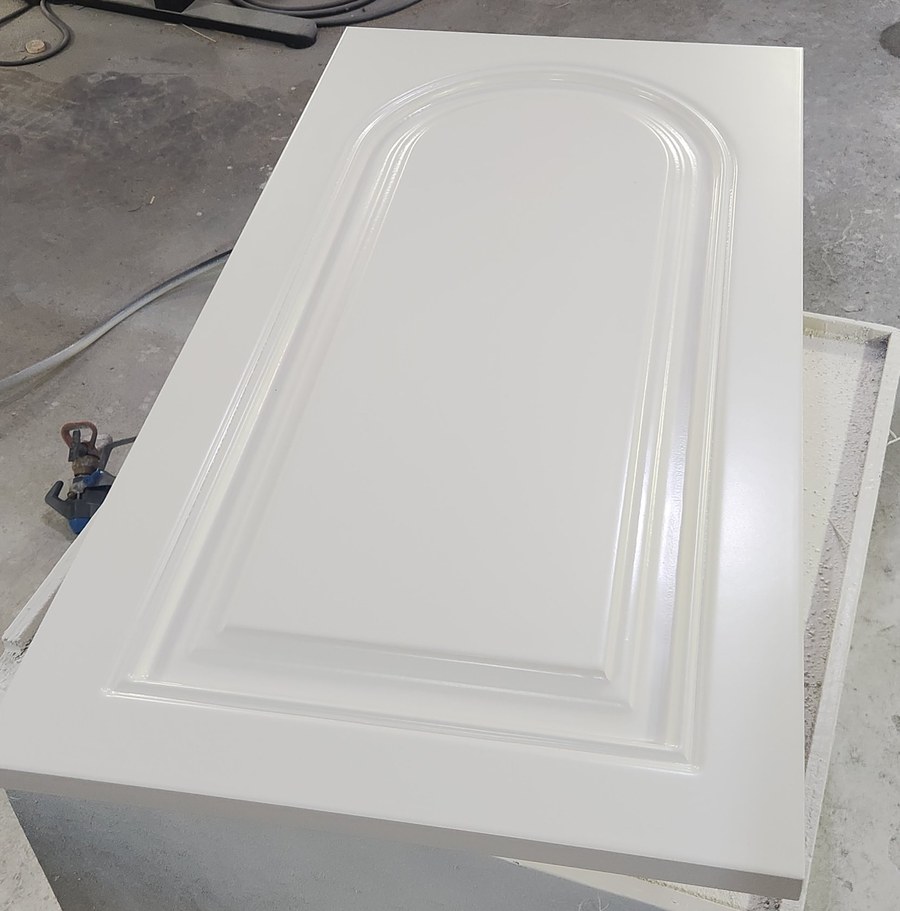
Two things changed at once. CNC routers got cheap enough for a one- or two-man shop, and painted kitchens took over. Suddenly the shop with a 4x8 router and a sheet of MDF could cut the whole door in one piece: pocket the panel, run the profile, cut it out. No glue-up, no panel to fit, no joint to telegraph through the paint. The five-piece look, from one piece.
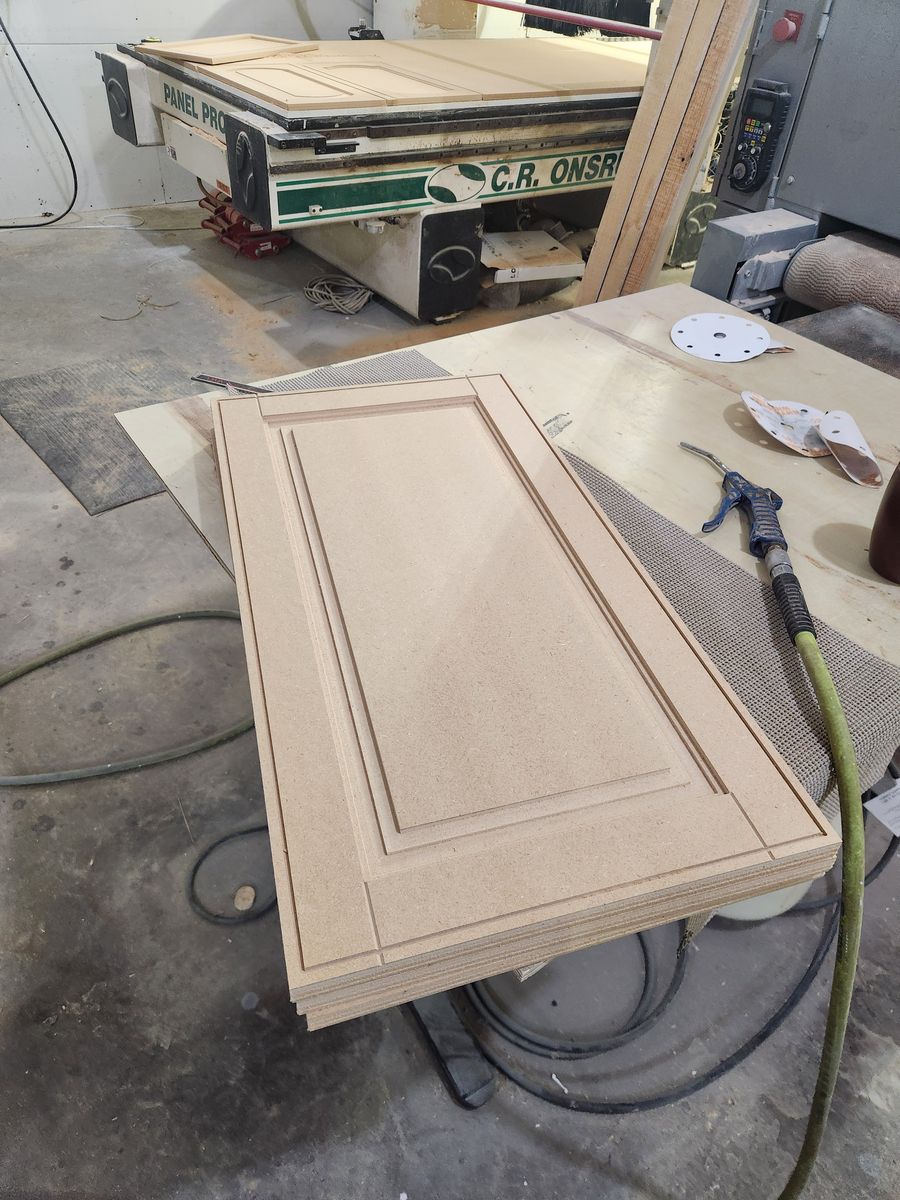
The catch was the drawing. Every door had to be drawn, every profile offset, every toolpath built, one door at a time. The machine was fast. The person in front of the computer was the bottleneck.
Where we are today
That's the gap I built DoorFORGE for. I run a one-man cabinet shop, and I got tired of spending the morning drawing doors so the machine could cut them in the afternoon. DoorFORGE is built on top of VCarve Pro. You pick the door style, edge, frame and panel from pictures, type in the sizes, and it nests the whole job on the sheet and brings it into VCarve Pro with the toolpaths built. Save for VCarve, run DoorFORGE Import, cut.
So the one-piece MDF door is now the fastest door a small shop can make, start to finish: no glue-up on the bench and no drawing on the screen.
Where it's going
- Beyond doors. The same idea works on anything flat and painted. Wainscot and slat wall panels are already in DoorFORGE, cut the same way from one sheet.
- From the cabinet software straight to the sheet. The door list shouldn't need re-typing. It should come out of the cabinet design and land on the sheet.
- More small shops doing their own doors. Outsourcing doors made sense when drawing them was the hard part. It isn't any more.
DoorFORGE is built on top of VCarve Pro and backed by The Homestead Workshop, a woodworking shop trusted by 24,000+ followers. I run it in my own shop.
Cut your next doors in one piece
The designer runs in your browser. The standard shaker door is free, no account needed.
Open the designerFrequently asked questions
When was MDF invented?
Hardboard, the ancestor of MDF, was discovered by accident in 1925 by William Mason, who left a press running on waste wood chips and got a dense, durable sheet. MDF itself was developed in the United States in the 1960s, with the first production in Deposit, New York, and was in mass production by the 1980s.
Why are so many cabinet doors made of MDF now?
Painted kitchens. MDF has no grain, stays flat, and takes paint smoother than solid wood, so when painted shaker kitchens took over, MDF became the natural door material. A CNC router can cut the whole door from one piece, which removed the last reason to build them from five parts.
What is a one-piece MDF door?
A cabinet door routed from a single sheet of 3/4 inch MDF. The CNC carves the panel and profile into the face and cuts the door out, so there are no rails, stiles or glue-ups. Painted, it reads like a five-piece door.
Are MDF cabinet doors better than wood?
For painted doors, usually yes: they stay flat, don't crack at the panel, and paint smoother. For stained doors, no. MDF has no grain to show.
What software do you use to make CNC cabinet doors?
DoorFORGE, from The Homestead Workshop, designs one-piece MDF doors in your browser and brings them into VCarve Pro nested on the sheet with the toolpaths built. The standard shaker door is free.
Ready to cut one? Start with the easiest way to make MDF cabinet doors on your CNC.